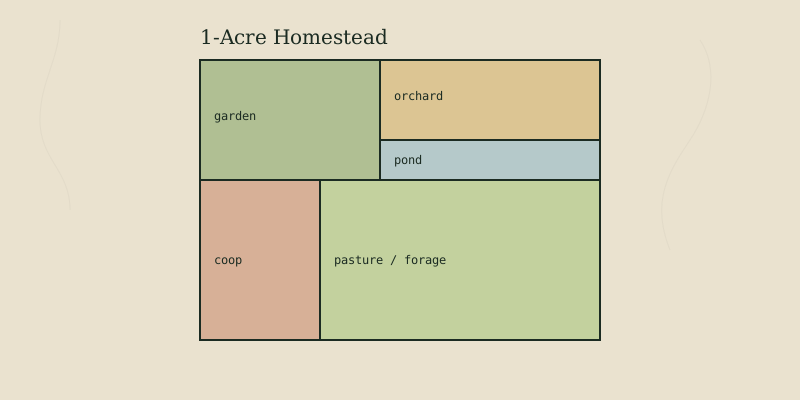
An acre is 43,560 square feet — about the size of a football field without the end zones. It feels small when you picture a farm and enormous when you have to maintain it by hand. The trick is intensity and layout: putting the things you touch daily close to the house and the things you visit occasionally further out. This idea — zones by frequency of visit — comes from permaculture and it's the single most useful planning concept I know.
The zone system
Zone 0 — the house
Where you live. Everything radiates out from here.
Zone 1 — daily (closest)
Kitchen garden, herbs, salad greens, the things you harvest every day. Right outside the door.
Zone 2 — frequent
Main vegetable beds, compost, chicken coop, small fruit. You visit daily but not constantly.
Zone 3 — occasional
Orchard, larger crops, main forage. Weekly attention.
Zone 4 — rare
Pasture, woodlot, wild harvest. Occasional.
A sample 1-acre allocation
| Area | Size | Purpose |
|---|---|---|
| House + yard | ~6,000 ft² | Living space, Zone 1 kitchen garden |
| Main vegetable garden | ~5,000 ft² | Intensive raised beds & cloth pots |
| Orchard | ~6,000 ft² | 12–20 dwarf fruit & nut trees |
| Chicken/poultry | ~2,000 ft² | Coop + run for 10–15 birds |
| Pasture/forage | ~15,000 ft² | Small grazing, green manure, expansion |
| Pond/water | ~2,000 ft² | Catchment, irrigation, optional fish |
| Paths, sheds, compost | ~7,500 ft² | Infrastructure and movement |
What an acre can realistically produce
With intensive beds, a family of four can grow the majority of their vegetables on 2,000–4,000 square feet. Add a dozen fruit trees and you've got fruit through much of the year. Fifteen hens give you more eggs than you can eat. The acre's limit isn't space — it's your time and your water. Plan for both before you plant.
Water is the real constraint
Before you fall in love with a layout, map your water. Where does rain run? Where could a catchment tank sit uphill of the garden so gravity does the work? I cover this in depth in the water-capture guide, but plan it into the layout from day one — retrofitting water is miserable.
Written by Jordan Polasek, founder of Texas Roots, from his greenhouse in El Campo, Texas. Free to share. If this helped, the best thanks is to grow something or pass it along.