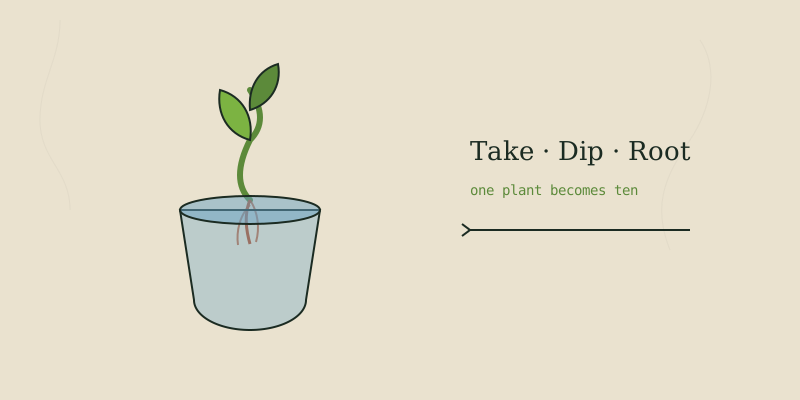
A cutting is a piece of a plant that grows roots and becomes a whole new plant — genetically identical to the parent. It's not complicated, it's not new, and it's how gardeners have shared plants over the fence for centuries. It's also how I produce most of the rooted cuttings I mail out. Once you can clone, you stop buying plants you already own.
What clones well (and what doesn't)
Soft-stemmed herbs and houseplants are the easiest entry point. Woody plants are slower but doable. Things grown from a single taproot — carrots, most trees from seed — don't clone from stem cuttings.
| Easy | Medium | Hard / not from cuttings |
|---|---|---|
| Mint, basil, pothos | Rosemary, lavender, tomato | Carrots, beets |
| Spider plant, succulents | Roses, hydrangea | Most large trees |
| Coleus, ivy | Fig, grape | Anything taprooted |
The four ways to root a cutting
- Water rooting — stick the cutting in a jar of water on a windowsill. Easiest for mint, pothos, basil. Change the water every few days.
- Soil/medium rooting — stick it in moist perlite or a light mix under a humidity dome. Stronger roots, better for the long haul.
- Division — for clumping plants, just pull the root ball apart into pieces, each with roots and growth. Instant new plants.
- Layering — bend a low branch to the ground, bury a section, and let it root before you cut it free. Great for woody plants that resist cuttings.
My exact cutting method
Pick the right stem
Take 4–6 inches of healthy new growth, not old woody wood and not the soft tip. Cut just below a node — the little bump where leaves attach. That's where roots form.
Strip the bottom
Remove leaves from the lower half. Too many leaves and the cutting loses water faster than it can drink; too few and it can't photosynthesize.
Dip in hormone
Dip the cut end in rooting hormone powder. It's optional for easy plants, a big help for woody ones.
Stick and cover
Push into moist perlite, firm gently, cover with a clear dome or a cut soda bottle to hold humidity. Bright indirect light, never direct sun — you'll cook it.
Wait and check
Roots come in one to three weeks depending on the plant. Tug gently; resistance means roots. Then pot up into soil.
Why I prefer cuttings over seed for some plants
A cutting is a clone, so it's true to the parent — same flavor, same color, same vigor. Seed can vary. If I've got a basil plant with perfect flavor or a tomato that shrugged off our heat, I clone it rather than gamble on its seed. It's also faster: a rooted cutting is weeks ahead of a seedling. That head start is part of why mailed cuttings establish so well.
Every plant in your garden is a potential ten. That's the whole secret to a cheap, abundant garden.
Written by Jordan Polasek, founder of Texas Roots, from his greenhouse in El Campo, Texas. Free to share. If this helped, the best thanks is to grow something or pass it along.