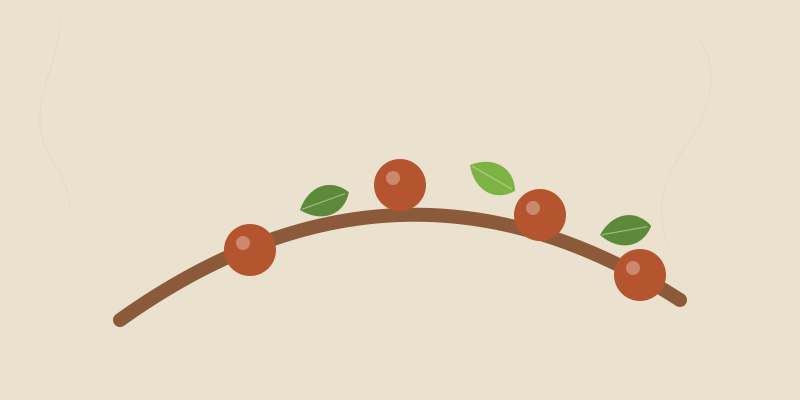
Understanding canes
Blackberries fruit on second-year canes (floricanes). First-year canes (primocanes) just grow; the next year they fruit, then die and are replaced. Knowing this is the whole game: after a cane fruits, cut it to the ground, and the new green canes take over for next year. Some newer varieties fruit on first-year canes too.
Texas-tough choices
Erect, thornless, heat-adapted varieties bred for the South (the 'Arapaho,' 'Natchez,' and Prime-Ark lines, among others) are the easy path. Trellis the canes on a simple two-wire fence and picking becomes effortless.
🔎 How to identify it
- Arching canes, often thorny, with palmate (5-leaflet) toothed leaves
- White-to-pink five-petaled rose-family flowers
- Aggregate berry that pulls off WITH its core (this distinguishes it from raspberry, which leaves the core behind)
- Canes root where the tips touch ground
⚠ Lookalikes & safety
A trailing wild cousin, also edible and common on Texas roadsides — same safe berry, just lower-growing.
NOT a bramble — pokeweed has smooth purple-black berries in hanging clusters on a smooth red stalk and is TOXIC. Real blackberries grow on thorny/arching canes with compound leaves. Never eat a dark berry off a smooth herbaceous stalk.
Edibility
Part of the free Texas Roots plant database, compiled by Jordan Polasek from his greenhouse in El Campo, Texas. Free to read and share. If it helped, the best thanks is to grow something.